AI employee vs chatbot: what's the difference?
A chatbot responds to messages. It follows a script or uses basic NLP to match a question to a pre-written answer. When it can't find a match, it says “I'll connect you to a human.”
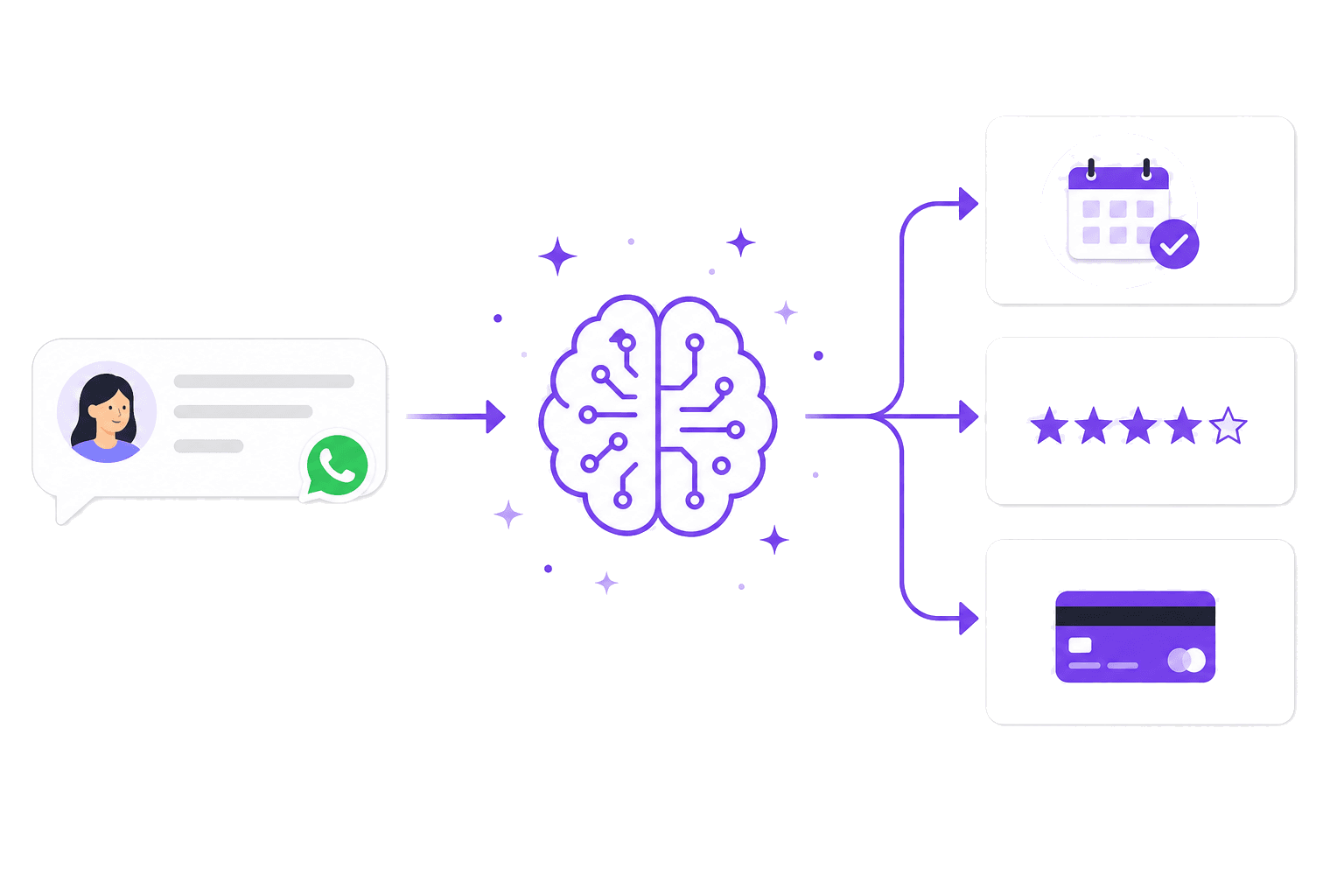
An AI employee handles the full conversation and the work that comes after it. When a lead messages on WhatsApp, it asks qualifying questions, scores the lead, creates a deal in the CRM, books an appointment, sends a confirmation, and schedules follow-ups.
| Chatbot | AI employee | |
|---|---|---|
| Scope | Answers questions, routes conversations | Handles full workflows end to end |
| Decisions | Follows scripted rules | Makes autonomous decisions within boundaries |
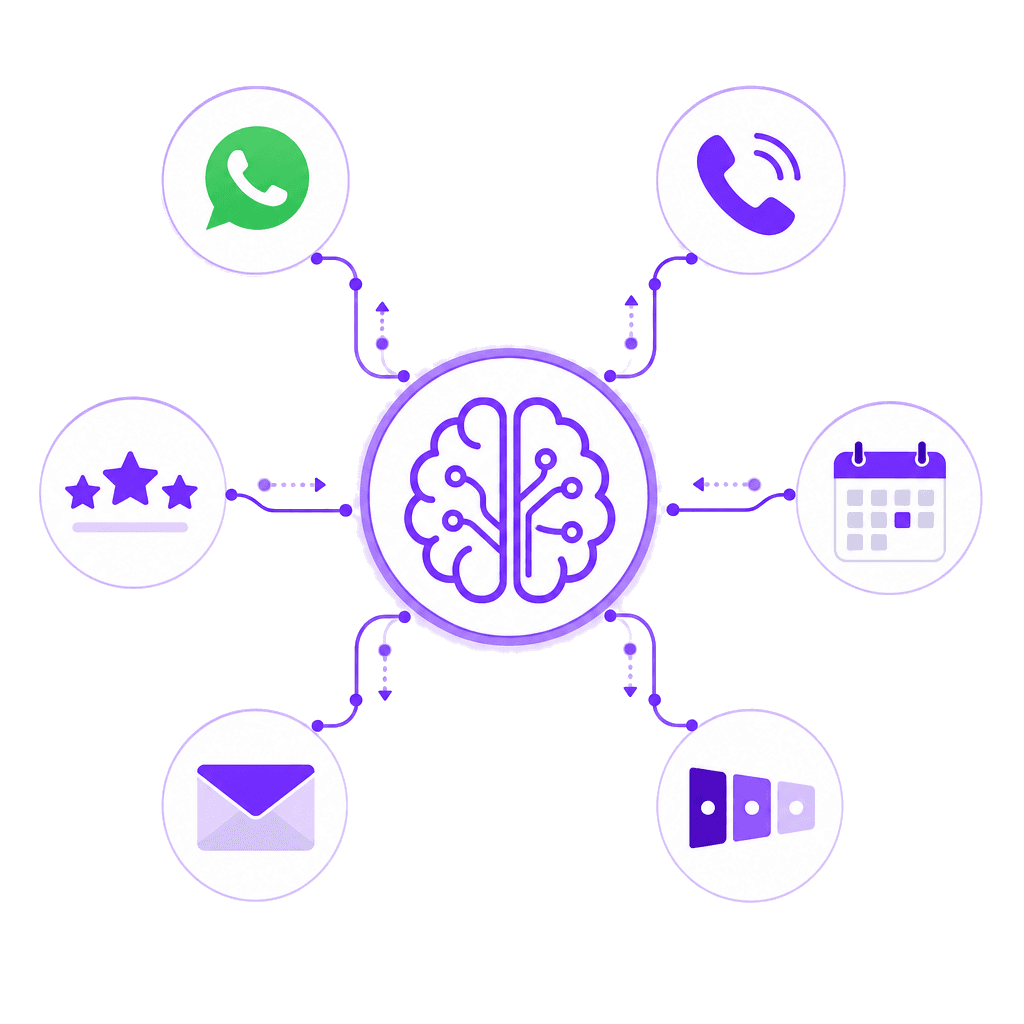
| Systems | Standalone widget | Connected to CRM, calendar, email, phone |
| Initiative | Waits for the customer | Proactively follows up on stale leads |
The simplest test: if you removed the AI and hired a person to do the same job, would that person need access to your calendar, CRM, and phone? If yes, you need an AI employee. If they'd just need an FAQ sheet, a chatbot is fine.
What AI employees look like in your industry
Clinics & healthcare
Patient messages → AI replies with service info → checks availability → confirms appointment → sends calendar invite → reminder 24h before → review request after visit.
Before
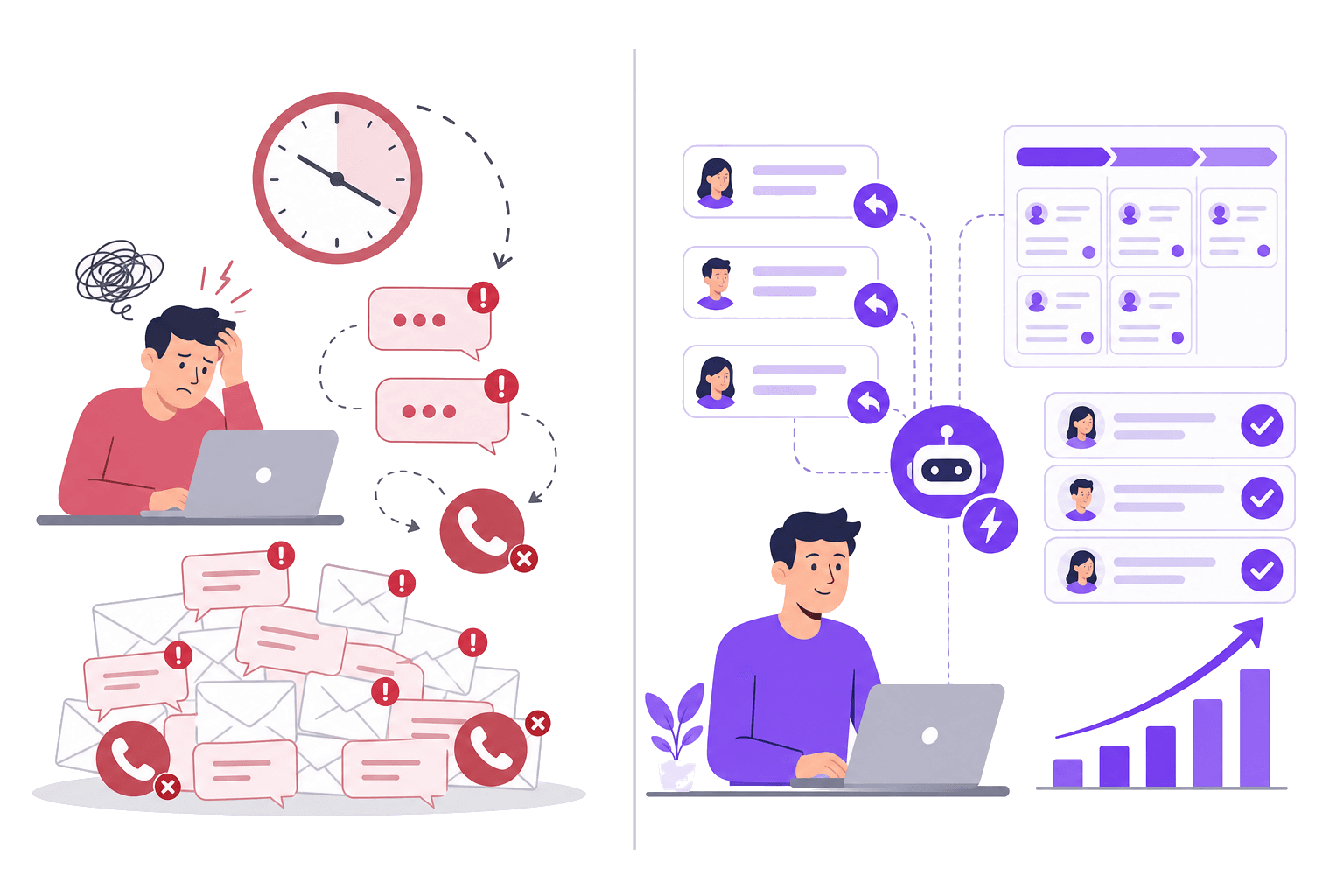
Receptionist spends 3+ hours daily on WhatsApp scheduling. Missed weekend messages. No-shows from forgotten appointments.
After
AI handles 80%+ of booking conversations. Response time drops from hours to seconds. Automated reminders cut no-shows.
Real estate agencies
Buyer enquires → AI qualifies (budget, location, bedrooms, timeline) → matches listings → sends details → books viewing → follows up 3 days after.
Before
Agents spend hours qualifying tyre-kickers. Serious buyers wait for a callback. Lead follow-up is inconsistent.
After
Every enquiry is qualified automatically. Hot leads reach agents pre-qualified, with budget and preferences confirmed.
F&B / restaurants
Customer messages → AI checks table availability → confirms booking → asks dietary requirements → sends day-of reminder → requests a Google review after dining.
Before
Staff juggle walk-ins, calls and messages during service. Reservations fall through the cracks.
After
Reservations are handled automatically. Staff focus on the guests already seated.
Education & tuition
Parent asks → AI shares timetable and pricing → collects child's age and level → books a trial class → follows up with parents who didn't complete booking.
Before
Admin staff answer the same questions repeatedly. Trial bookings need multiple back-and-forth messages.
After
Enquiries answered instantly. Trial class bookings confirmed in one conversation.
Related capabilities
An AI employee is the full package. If you're looking for a specific capability, we also build standalone AI chatbots for lead qualification and appointment booking, AI lead generation systems for automated sales pipelines, and AI customer support agents for first-line resolution. All built on the WhatsApp Business API.
What an AI employee costs
The global market prices AI employees from $25/month (basic customer service) to $5,000+/month (enterprise sales agents). At DoubleAM, cost depends on scope: a single-role WhatsApp booking agent is a different project from a multi-channel system with CRM integration and automated follow-ups.
Singapore businesses can offset costs through the Productivity Solutions Grant (PSG), which covers up to 50% of qualifying AI projects (capped at SGD $30,000), and the Enterprise Innovation Scheme (EIS), which offers 400% tax deduction on up to $50,000 of AI expenditure for YA2027-2028.
Why Singapore businesses are adopting AI employees now
- WhatsApp is universal. Over 5 million Singaporeans use WhatsApp. An AI employee on WhatsApp reaches customers where they already are.
- Government subsidies are real. The PSG, EIS, and IMDA's National AI Impact Programme lower the financial barriers.
- Labour costs keep rising. A full-time receptionist or SDR costs $2,500 to $4,500/month. An AI employee handles the repetitive parts at a fraction of the cost, and works nights and weekends.