Start with process, then layer AI
The payoff from AI comes after you fix the process underneath it. Galaxy Grooming ditched pen-and-paper methods, mapped every step from booking to checkout, rebuilt their flow, and only then rolled out automation. In six months they logged 542 clients and 787 dogs, hit roughly $12,000 in peak monthly revenue, and ran daily operations in about one hour a day.
“If you have software to automate the mundane tasks, you could save the admin staff salary and then use that money to be more competitive… and then your business is going to run more smoothly.” — Aiden, Galaxy Grooming
Professional groomers relying on generic tools like Google Calendar spend 8 to 12 hours each week on admin that purpose-built automation finishes in minutes. That lost time translates to $600 to $900 weekly — more than $31,000 a year in missed revenue.
What to do next
Map your workflow end to end on paper: booking, reminders, intake, grooming stages, checkout, follow-up. Identify your top two bottlenecks. Set two KPIs that matter: drive time per appointment and check-in minutes. Pilot AI only where it moves those metrics, not everywhere at once.
AI scheduling and route optimisation for mobile
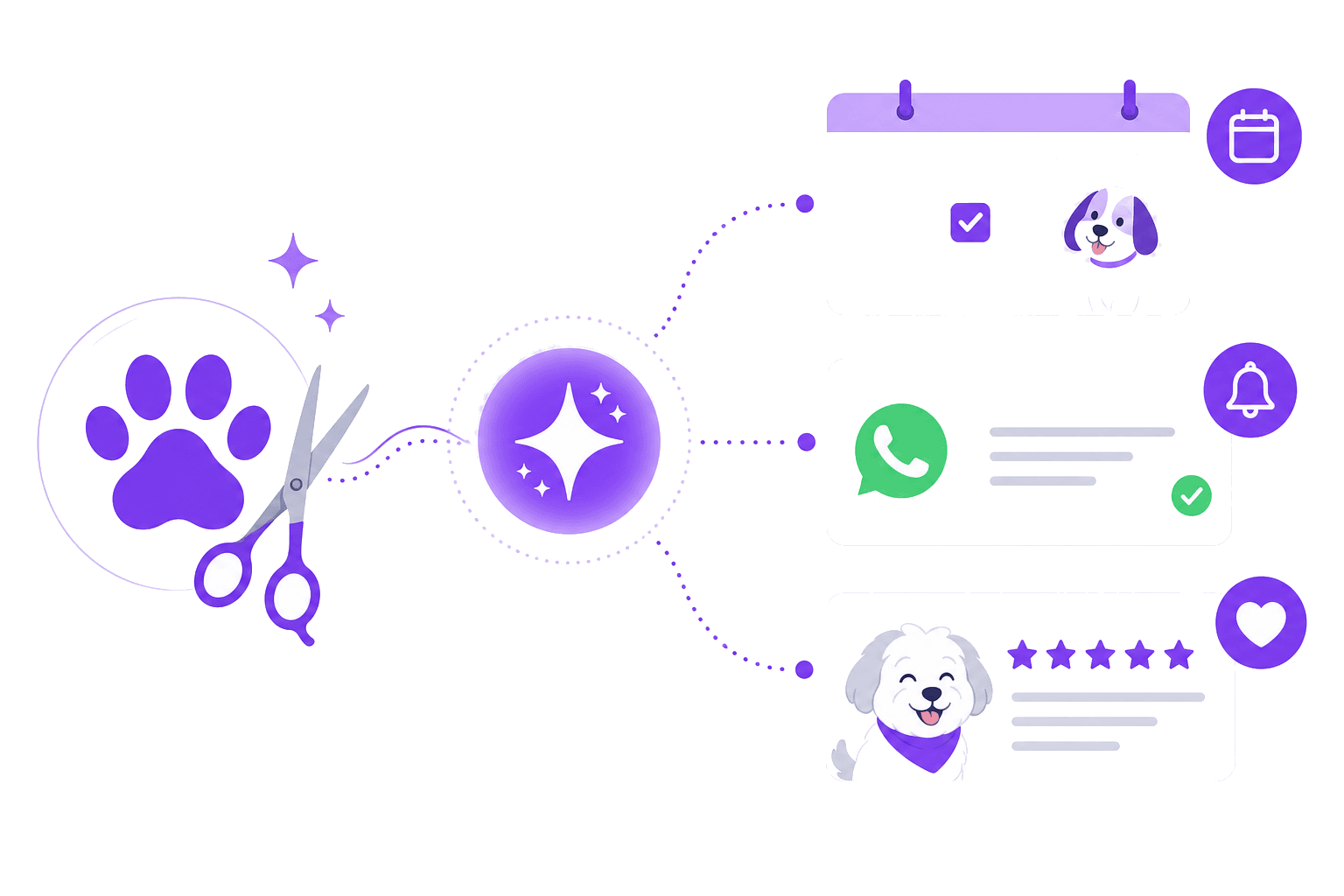
Smart scheduling turns windshield time into billable grooms. Mobile pet groomers using AI scheduling reduced drive time by 35% while adding 1 to 2 extra appointments daily. Generic calendars do not account for travel time, zone days, or parking constraints — that is why they create chaos for mobile teams.
Route optimisation playbook
Pilot AI scheduling with hard constraints. Create zone days, add realistic travel buffers, and define no-go windows for school traffic or street cleaning. Track drive time per appointment and on-time starts for two to four weeks. Only expand automation after you see stable improvements.
Automated intake, pre-visit triage, and client comms
Front-loading data removes 10 to 15 minutes of dead time per appointment. AI intake can pre-fill pet profiles, estimate service duration from breed and coat photos, and trigger add-on recommendations. That translates into faster check-ins and tighter schedules.
Checklist for smoother intake
- Require photo upload and policy e-sign at booking
- Auto-confirm immediately by SMS
- Send reminders 24 hours and 2 hours before the visit
- Sync intake data directly to client and pet profiles
Selecting your core platform
Cheap tools are expensive when they waste 8 to 12 hours a week you could be grooming. Do the math: admin hours times your hourly billable rate versus the monthly software fee. If a platform saves five hours a week, it pays for itself. Prioritise tools that eliminate your top bottlenecks, not the longest feature list.
Phased adoption with hard ROI metrics
The best operators implement AI in sprints and prove ROI in weeks. Companies with significant AI adoption report 93% positive outlook versus 71% for non-adopters.
90-day AI sprint plan
- Days 1 to 14: Baseline KPIs — drive time per appointment, check-in minutes, on-time starts, slots per day, revenue per van
- Days 15 to 45: Pilot AI scheduling and SMS reminders
- Days 46 to 90: Add AI intake and simple dashboards. Review weekly against your baseline